
India's Journey to the Moon: Learn English Through the Chandrayaan Story
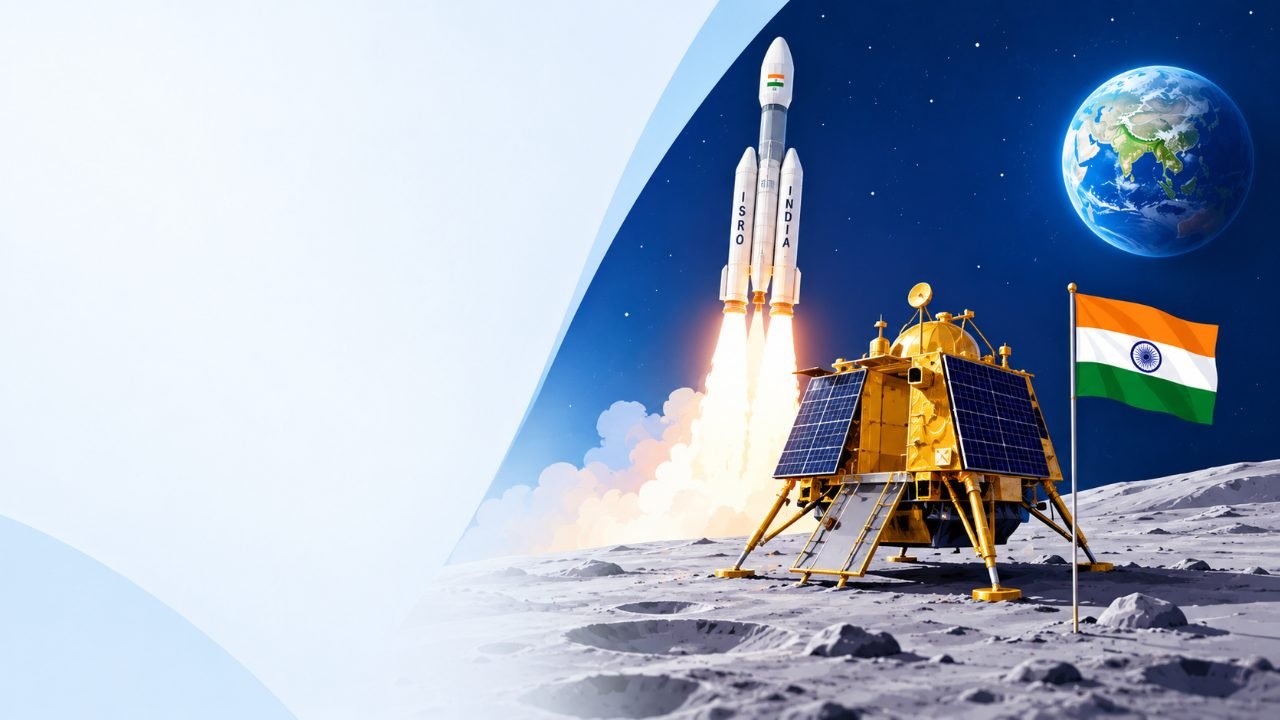
Table of contents
- English Story: India's Journey to the Moon, the Chandrayaan Story
- Why This Story Matters
- What Does "Chandrayaan" Mean?
- Chandrayaan-1: India's First Step Beyond Earth's Orbit
- Chandrayaan-2: A Painful but Valuable Setback
- Chandrayaan-3: A Historic Triumph
- Understanding Why the South Pole Matters So Much
- Chandrayaan-4: An Even More Ambitious Goal
- What Makes Docking in Space So Difficult?
- Looking Further Ahead: Chandrayaan-5 and Beyond
- Why Space Exploration Matters for India
- India's Place Among the World's Space Powers
- Learning From Setbacks as Well as Successes
- A Short Timeline of India's Moon Missions
- Practice Conversation: Two Students Discuss Chandrayaan
- हिंदी व्याख्या (Hindi Explanation)
- 1. यह कहानी इतनी अहम क्यों है
- 2. "चंद्रयान" का मतलब क्या है
- 3. चंद्रयान-1: धरती की कक्षा से बाहर भारत का पहला क़दम
- 4. चंद्रयान-2: एक दर्दनाक पर क़ीमती झटका
- 5. चंद्रयान-3: एक ऐतिहासिक जीत
- 6. चंद्रयान-4: एक और भी बड़ा लक्ष्य
- 7. दक्षिणी ध्रुव इतना अहम क्यों है
- 8. अंतरिक्ष में डॉकिंग इतनी मुश्किल क्यों है
- 9. आगे क्या — चंद्रयान-5 और उससे परे
- 10. भारत का अंतरिक्ष शक्तियों में स्थान, और असफलता से सीखना
- English Summary
- हिंदी सारांश (Hindi Summary)
- Difficult Words (कठिन शब्द)
- Useful English Sentences (काम के अंग्रेज़ी वाक्य)
- Spoken English Practice (बोलकर अभ्यास करें)
- Grammar & Sentence Patterns (व्याकरण और वाक्य के पैटर्न)
- Pattern 1: Passive voice for mission events
- Pattern 2: Rather than simply X, Y (correcting a narrow view)
- Pattern 3: Only a handful of X have Y (rarity)
- Pattern 4: Building on + noun (describing progression)
- Pattern 5: Even X can Y (highlighting sensitivity or risk)
- Comprehension Questions & Answers
- Questions
- Answers
- Speaking Practice (बोलने का अभ्यास)
- What You Learned From This Article
English Story: India's Journey to the Moon, the Chandrayaan Story
Why This Story Matters
In August 2023, India became the first country in the world to land a spacecraft near the Moon's south pole, and only the fourth nation ever to achieve a soft landing on the Moon at all, after the Soviet Union, the United States and China. This achievement, part of a mission called Chandrayaan-3, was celebrated across the country and turned India's space programme, run by the Indian Space Research Organisation, or ISRO, into a genuine source of national pride and global respect.
This article tells the story of India's Chandrayaan missions in simple English, from an ambitious first attempt in 2008 to the historic success of Chandrayaan-3 and the even more complex missions ISRO is now planning for the years ahead. As you read, pay attention to the vocabulary and sentence patterns used, since this story is designed to help you build both your English and your understanding of space exploration.
What Does "Chandrayaan" Mean?
The word "Chandrayaan" comes from Sanskrit, combining "Chandra," meaning Moon, and "yaan," meaning vehicle or craft. Put together, it simply means "Moon vehicle," a fitting name for a programme entirely dedicated to exploring Earth's only natural satellite.
ISRO's Chandrayaan programme is now in its fourth and fifth generations of planning, with each mission building directly on the technology, lessons and partial successes of the ones that came before it, a pattern common to space exploration programmes around the world, where no single mission exists in isolation from the ones that preceded it.
Chandrayaan-1: India's First Step Beyond Earth's Orbit
India's journey to the Moon began with Chandrayaan-1, launched on 22 October 2008. This was an orbiter mission, meaning the spacecraft was designed to circle the Moon and study it from orbit, rather than attempting to land on the surface. Chandrayaan-1 carried instruments from several international space agencies alongside ISRO's own equipment, reflecting early international collaboration in India's space ambitions.
The mission achieved something genuinely historic: it played a key role in confirming the presence of water molecules on the lunar surface, a finding that significantly changed scientific understanding of the Moon and reignited global interest in lunar exploration more broadly. Although contact with the orbiter was lost in August 2009, cutting the mission short of its originally planned two-year duration, Chandrayaan-1 is still widely regarded as a landmark success that firmly established India as a serious, credible participant in lunar science.
Chandrayaan-2: A Painful but Valuable Setback
Building on this early success, ISRO launched the much more ambitious Chandrayaan-2 mission in 2019, which included an orbiter, a lander named Vikram, and a rover named Pragyan, designed to actually touch down on the lunar surface and explore it directly. Tragically, during its final descent towards the Moon in September 2019, the lander lost communication and crashed onto the lunar surface, falling just short of becoming India's first successful soft landing.
While this was a painful and very public setback, ISRO's orbiter component of the mission continued to function successfully, and engineers carefully studied exactly what had gone wrong during the failed landing attempt. This detailed analysis of the failure became an essential foundation for the mission that followed, demonstrating a pattern common across space exploration worldwide: that even failed missions often generate the precise engineering knowledge needed for future success.
Chandrayaan-3: A Historic Triumph
Learning directly from Chandrayaan-2's failure, ISRO launched Chandrayaan-3 in July 2023, and on 23 August 2023, its Vikram lander successfully touched down near the Moon's south pole, a particularly challenging and scientifically valuable region due to its rugged terrain and the presence of permanently shadowed craters believed to contain water ice.
With this landing, India became the first country in history to successfully reach the Moon's south pole region, and only the fourth nation overall, after the United States, the Soviet Union and China, to achieve any successful soft lunar landing. The Pragyan rover then explored the lunar surface for about two weeks, gathering valuable scientific data before the onset of the extremely cold lunar night, which the mission's solar-powered equipment was not designed to survive.
The success of Chandrayaan-3 triggered nationwide celebrations across India, and 23 August is now officially observed each year as National Space Day, commemorating this historic achievement and celebrating India's growing capabilities in space exploration more broadly.
Understanding Why the South Pole Matters So Much
It is worth pausing on exactly why ISRO, and indeed several other space agencies worldwide, have become so focused specifically on the Moon's south pole in recent years. Unlike the equatorial regions explored during the Apollo missions of the 1960s and 1970s, the lunar south pole contains permanently shadowed craters, deep depressions that never receive direct sunlight due to the Moon's particular tilt and orbital characteristics.
Within these permanently dark regions, scientists believe significant quantities of water ice may be trapped, frozen for potentially billions of years. This water ice matters enormously for future space exploration, since it could theoretically be processed to provide drinking water, breathable oxygen, and even rocket fuel for future lunar missions or bases, dramatically reducing the cost and difficulty of sustaining a longer-term human presence on the Moon. This is precisely why Chandrayaan-3's successful landing in this specific, scientifically rich but technically challenging region was considered such a significant achievement, well beyond simply being a difficult engineering feat.
Chandrayaan-4: An Even More Ambitious Goal
Building on this success, ISRO is now developing Chandrayaan-4, a considerably more complex mission with an extremely ambitious goal: not simply landing on the Moon, but collecting lunar rock and soil samples and successfully bringing them back to Earth, a feat previously achieved only by the United States, the Soviet Union and, more recently, China.
Chandrayaan-4 will require technology and mission planning far beyond that used in Chandrayaan-3. The mission involves five separate spacecraft modules, launched across two separate rocket launches, and will require India's first-ever docking operation in space, meaning two spacecraft components successfully joining together while travelling at high speed, a technically demanding manoeuvre that only a handful of countries have ever accomplished. The mission aims to collect between two and three kilograms of lunar material from near the Moon's south pole, with current landing site studies focused on an area near a lunar mountain called Mons Mouton.
Originally targeted for 2027, ISRO's current public statements, including comments from ISRO Chairman V. Narayanan throughout 2026, now point to a 2028 launch, reflecting the genuine technical complexity involved in attempting India's most ambitious robotic lunar mission to date.
What Makes Docking in Space So Difficult?
Since Chandrayaan-4 will require India's first-ever space docking operation, it is worth understanding why this particular manoeuvre is considered such a demanding technical milestone. Docking involves two separate spacecraft, each travelling at extremely high orbital speeds, often several kilometres per second, precisely matching their speed, direction and orientation closely enough to physically connect without colliding destructively.
Even a very small error in timing, speed or alignment during this process can cause a mission-ending collision, which is why only a small number of space agencies worldwide, principally those of the United States, Russia and China, have successfully demonstrated this capability to date. ISRO itself conducted an earlier, dedicated experimental mission specifically to test and prove this docking capability in controlled conditions, before committing to rely on it for a mission as scientifically valuable as Chandrayaan-4.
Looking Further Ahead: Chandrayaan-5 and Beyond
Even as Chandrayaan-4 remains under development, ISRO has confirmed that design work has also begun on Chandrayaan-5, though detailed objectives and a firm timeline for this mission have not yet been publicly disclosed. ISRO's broader space exploration plans extend well beyond lunar missions alone, with the agency also developing Gaganyaan, India's first crewed spaceflight programme, which is targeting an uncrewed test flight within 2026 ahead of an eventual crewed mission, alongside long-term plans for a Bharatiya Antariksh Station, India's own space station, with an initial module targeted for 2028, and a dedicated Venus Orbiter Mission currently planned for March 2028.
Why Space Exploration Matters for India
Beyond the scientific knowledge gained directly from these missions, India's space programme carries significant practical and symbolic importance. ISRO has built a global reputation for executing complex, high-quality space missions at a comparatively low cost, a reputation that has attracted international satellite launch contracts and scientific partnerships, generating both revenue and diplomatic goodwill for the country.
Missions like Chandrayaan-3 also carry enormous symbolic weight domestically, inspiring young Indians to pursue careers in science, technology, engineering and mathematics, fields collectively often referred to as STEM, and reinforcing a broader national narrative of India as a country capable of achieving world-class technological feats through its own indigenous expertise and institutions, built up steadily over more than six decades since ISRO's founding in 1969.
India's Place Among the World's Space Powers
It is also worth situating India's achievements within the broader global context of space exploration. Historically, only a handful of nations, principally the United States and the former Soviet Union, and more recently China, have possessed the full range of capabilities needed to independently design, launch and operate complex interplanetary and lunar missions. India's steady progression from Chandrayaan-1's orbital mission in 2008 to Chandrayaan-3's successful landing in 2023, achieved in just fifteen years and largely using indigenously developed technology, represents an unusually rapid rise among the world's space-faring nations.
This progress has not gone unnoticed internationally. ISRO's reputation for completing ambitious missions at relatively modest cost compared with other major space agencies has made it an increasingly attractive partner for international satellite launches and joint scientific missions, further reinforcing India's standing as what officials now routinely describe as one of the world's top five space-faring nations.
Learning From Setbacks as Well as Successes
One of the most valuable lessons from India's Chandrayaan story is the importance of learning systematically from failure. Chandrayaan-2's crash in 2019 could easily have been viewed only as a disappointment, yet ISRO's careful, methodical analysis of exactly what went wrong during that failed landing directly enabled Chandrayaan-3's success just four years later.
This pattern, treating setbacks as sources of essential engineering data rather than simply as failures to be forgotten, reflects an approach common among the world's most successful space agencies, and offers a broader lesson applicable well beyond space exploration: that sustained, long-term achievement in any genuinely difficult, technically demanding field is rarely a straight line, but is instead typically built through a repeated cycle of ambition, failure, careful analysis and renewed, better-informed effort.
A Short Timeline of India's Moon Missions
For quick reference, here is a short timeline summarising the major events discussed in this article.
- 1969: ISRO is founded.
- 2008: Chandrayaan-1 launches; helps confirm water on the Moon.
- 2019: Chandrayaan-2's lander crashes during its final descent.
- 2023: Chandrayaan-3's Vikram lander successfully touches down near the Moon's south pole on 23 August.
- 2024 onwards: Chandrayaan-4, a lunar sample-return mission, is approved and developed, targeting a 2028 launch.
- 2026: Design work on Chandrayaan-5 confirmed; Gaganyaan uncrewed test targeted within the year.
- 2028 (planned): Chandrayaan-4 launch, first Bharatiya Antariksh Station module, and Venus Orbiter Mission.
Practice Conversation: Two Students Discuss Chandrayaan
This is an imaginary conversation for English practice. Read it aloud with a friend, taking one role each.
Ananya: Did you know India was the first country to land near the Moon's south pole?
Rohan: Yes, with Chandrayaan-3 in 2023. That's actually why we now celebrate National Space Day.
Ananya: I didn't realise Chandrayaan-2 had crashed just four years before that.
Rohan: It did, but ISRO studied the failure so carefully that it directly helped Chandrayaan-3 succeed.
Ananya: That's a great example of learning from mistakes. What's next for ISRO?
Rohan: Chandrayaan-4, which aims to bring Moon rocks back to Earth. It's far more complex.
Ananya: It really shows how one mission builds on the next, step by step.
Rohan: Exactly. It's inspiring to see how far India's space programme has come since 1969.
हिंदी व्याख्या (Hindi Explanation)
ऊपर आपने भारत के चंद्रयान मिशनों की पूरी कहानी अंग्रेज़ी में पढ़ी। अब उसे हिंदी में संक्षेप में समझते हैं। यह हर वाक्य का अनुवाद नहीं, बल्कि हर हिस्से का मुख्य भाव है।
1. यह कहानी इतनी अहम क्यों है
अगस्त 2023 में भारत चाँद के दक्षिणी ध्रुव के पास अंतरिक्षयान उतारने वाला दुनिया का पहला देश बना, और सोवियत संघ, अमेरिका और चीन के बाद चाँद पर सॉफ़्ट लैंडिंग करने वाला चौथा देश। यह उपलब्धि, चंद्रयान-3 मिशन का हिस्सा, पूरे देश में मनाई गई और भारतीय अंतरिक्ष अनुसंधान संगठन (ISRO) को राष्ट्रीय गर्व और वैश्विक सम्मान का असली स्रोत बना दिया।
2. "चंद्रयान" का मतलब क्या है
"चंद्रयान" संस्कृत से आया है — "चंद्र" यानी चाँद, और "यान" यानी वाहन। साथ मिलाकर इसका मतलब है "चाँद का वाहन।" ISRO का चंद्रयान कार्यक्रम अब अपनी चौथी और पाँचवीं पीढ़ी की योजना में है, हर मिशन पिछले की तकनीक, सीख और आंशिक सफलताओं पर बनता है।
3. चंद्रयान-1: धरती की कक्षा से बाहर भारत का पहला क़दम
भारत की चाँद यात्रा 22 अक्टूबर 2008 को चंद्रयान-1 से शुरू हुई — एक ऑर्बिटर मिशन, जो चाँद की परिक्रमा करके उसका अध्ययन करने के लिए बना था, उतरने के लिए नहीं। इसने चाँद की सतह पर पानी के अणुओं की मौजूदगी की पुष्टि में अहम भूमिका निभाई — एक ऐसी खोज जिसने चाँद को लेकर वैज्ञानिक समझ को काफ़ी बदल दिया। अगस्त 2009 में ऑर्बिटर से संपर्क टूट गया, जिससे मिशन अपनी तय दो साल की अवधि से पहले ही ख़त्म हो गया, पर चंद्रयान-1 को आज भी एक बड़ी सफलता माना जाता है जिसने भारत को चंद्र विज्ञान में एक गंभीर भागीदार के रूप में स्थापित किया।
4. चंद्रयान-2: एक दर्दनाक पर क़ीमती झटका
2019 में ISRO ने कहीं ज़्यादा महत्वाकांक्षी चंद्रयान-2 मिशन भेजा, जिसमें एक ऑर्बिटर, विक्रम नाम का लैंडर, और प्रज्ञान नाम का रोवर शामिल था — जो सीधे चाँद की सतह पर उतरने और उसे खोजने के लिए बना था। दुखद रूप से, सितंबर 2019 में चाँद की ओर आख़िरी उतराई के दौरान लैंडर से संपर्क टूट गया और वह दुर्घटनाग्रस्त हो गया, भारत की पहली सफल सॉफ़्ट लैंडिंग से बस थोड़ा पहले चूक गया। यह एक दर्दनाक, बेहद सार्वजनिक झटका था, पर मिशन का ऑर्बिटर हिस्सा सफलतापूर्वक काम करता रहा, और इंजीनियरों ने ठीक-ठीक समझा कि असफल लैंडिंग के दौरान क्या ग़लत हुआ। इस विस्तृत विश्लेषण ने अगले मिशन की ज़रूरी नींव रखी — यह दिखाते हुए कि असफल मिशन भी अक्सर भविष्य की सफलता के लिए ज़रूरी इंजीनियरिंग ज्ञान देते हैं।
5. चंद्रयान-3: एक ऐतिहासिक जीत
चंद्रयान-2 की असफलता से सीधे सीखते हुए, ISRO ने जुलाई 2023 में चंद्रयान-3 भेजा, और 23 अगस्त 2023 को इसका विक्रम लैंडर चाँद के दक्षिणी ध्रुव के पास सफलतापूर्वक उतरा — यह एक बेहद चुनौतीपूर्ण पर वैज्ञानिक रूप से क़ीमती क्षेत्र है, जहाँ ऊबड़-खाबड़ भूभाग और स्थायी रूप से छाया वाले गड्ढे हैं, जिनमें पानी की बर्फ़ होने का अनुमान है। इस लैंडिंग के साथ भारत चाँद के दक्षिणी ध्रुव क्षेत्र तक सफलतापूर्वक पहुँचने वाला इतिहास का पहला देश बना, और किसी भी सफल चंद्र सॉफ़्ट लैंडिंग करने वाला कुल मिलाकर सिर्फ़ चौथा देश। प्रज्ञान रोवर ने लगभग दो हफ़्ते तक चाँद की सतह का अध्ययन किया, बेहद ठंडी चांद्र रात शुरू होने से पहले क़ीमती वैज्ञानिक डेटा जुटाया। चंद्रयान-3 की सफलता ने पूरे भारत में जश्न मनाया, और 23 अगस्त को अब हर साल आधिकारिक रूप से "राष्ट्रीय अंतरिक्ष दिवस" के रूप में मनाया जाता है।
6. चंद्रयान-4: एक और भी बड़ा लक्ष्य
इस सफलता पर आगे बढ़ते हुए, ISRO अब चंद्रयान-4 विकसित कर रहा है — एक बहुत जटिल मिशन जिसका बेहद महत्वाकांक्षी लक्ष्य है: सिर्फ़ चाँद पर उतरना नहीं, बल्कि चंद्र चट्टान और मिट्टी के नमूने इकट्ठा करके सफलतापूर्वक धरती पर वापस लाना — यह उपलब्धि पहले सिर्फ़ अमेरिका, सोवियत संघ और हाल ही में चीन ने हासिल की है। इस मिशन में पाँच अलग अंतरिक्षयान मॉड्यूल, दो अलग रॉकेट प्रक्षेपणों में भेजे जाएँगे, और भारत का पहला अंतरिक्ष "डॉकिंग" ऑपरेशन चाहिए होगा — यानी दो अंतरिक्षयान हिस्सों का तेज़ गति से यात्रा करते हुए सफलतापूर्वक जुड़ना, जो बेहद मुश्किल तकनीकी काम है। मूल रूप से 2027 के लिए तय, ISRO के मौजूदा बयान अब 2028 में प्रक्षेपण की ओर इशारा करते हैं।
7. दक्षिणी ध्रुव इतना अहम क्यों है
1960-70 के दशक के अपोलो मिशनों द्वारा खोजे गए भूमध्यरेखीय क्षेत्रों के उलट, चाँद के दक्षिणी ध्रुव में स्थायी रूप से छाया वाले गहरे गड्ढे हैं, जहाँ कभी सीधी धूप नहीं पहुँचती। वैज्ञानिकों का मानना है कि इन अंधेरे क्षेत्रों में बड़ी मात्रा में पानी की बर्फ़ फँसी हो सकती है, संभवतः अरबों सालों से जमी हुई। यह पानी भविष्य के अंतरिक्ष अन्वेषण के लिए बेहद अहम है, क्योंकि इसे पीने के पानी, साँस लेने योग्य ऑक्सीजन, और यहाँ तक कि रॉकेट ईंधन में बदला जा सकता है — जो चाँद पर लंबे समय तक इंसानी मौजूदगी की लागत और मुश्किल काफ़ी कम कर सकता है।
8. अंतरिक्ष में डॉकिंग इतनी मुश्किल क्यों है
डॉकिंग में दो अलग अंतरिक्षयान, जो बेहद तेज़ गति (अक्सर कई किलोमीटर प्रति सेकंड) से यात्रा कर रहे होते हैं, अपनी गति, दिशा और स्थिति को इतनी सटीकता से मिलाते हैं कि वे बिना टकराए सुरक्षित रूप से जुड़ सकें। समय, गति या सही दिशा में बेहद छोटी ग़लती भी विनाशकारी टक्कर का कारण बन सकती है, इसीलिए दुनिया की सिर्फ़ गिनी-चुनी अंतरिक्ष एजेंसियों — मुख्य रूप से अमेरिका, रूस और चीन — ने अब तक इस क्षमता को सफलतापूर्वक साबित किया है।
9. आगे क्या — चंद्रयान-5 और उससे परे
चंद्रयान-4 पर काम जारी रहते हुए भी, ISRO ने पुष्टि की है कि चंद्रयान-5 पर डिज़ाइन का काम भी शुरू हो चुका है, हालाँकि इसके विस्तृत लक्ष्य और पक्की समयसीमा अभी सार्वजनिक नहीं की गई है। ISRO की व्यापक योजनाओं में गगनयान (भारत का पहला मानव अंतरिक्ष उड़ान कार्यक्रम, 2026 में मानव-रहित परीक्षण उड़ान का लक्ष्य), भारतीय अंतरिक्ष स्टेशन (पहला मॉड्यूल 2028 तक), और शुक्र ऑर्बिटर मिशन (मार्च 2028 के लिए योजनाबद्ध) भी शामिल हैं।
10. भारत का अंतरिक्ष शक्तियों में स्थान, और असफलता से सीखना
ऐतिहासिक रूप से सिर्फ़ अमेरिका, पूर्व सोवियत संघ और हाल में चीन के पास जटिल अंतरग्रहीय और चंद्र मिशन स्वतंत्र रूप से डिज़ाइन, प्रक्षेपित और संचालित करने की पूरी क्षमता रही है। 2008 के चंद्रयान-1 से 2023 के चंद्रयान-3 तक, सिर्फ़ पंद्रह सालों में, ज़्यादातर स्वदेशी तकनीक से हासिल की गई भारत की प्रगति असाधारण रूप से तेज़ है। चंद्रयान-2 की 2019 की दुर्घटना को सिर्फ़ निराशा के रूप में देखा जा सकता था, पर ISRO के सावधान, व्यवस्थित विश्लेषण ने ही सिर्फ़ चार साल बाद चंद्रयान-3 की सफलता को संभव बनाया — यह सीख सिर्फ़ अंतरिक्ष तक सीमित नहीं: किसी भी सच में मुश्किल, तकनीकी क्षेत्र में स्थायी उपलब्धि शायद ही कभी सीधी रेखा में आती है, बल्कि महत्वाकांक्षा, असफलता, सावधान विश्लेषण और नए सिरे से बेहतर समझी गई कोशिश के दोहराए जाने वाले चक्र से बनती है।
English Summary
India's Chandrayaan programme began with the orbiter mission Chandrayaan-1 in 2008, which helped confirm water on the Moon. Chandrayaan-2's lander crashed in 2019, but ISRO's careful analysis of that failure enabled Chandrayaan-3's historic success in August 2023, when India became the first country to land near the Moon's south pole, now celebrated as National Space Day. ISRO is now developing the far more complex Chandrayaan-4, a lunar sample-return mission requiring India's first space docking operation, targeting a 2028 launch, alongside Chandrayaan-5, Gaganyaan's crewed spaceflight programme, a planned Bharatiya Antariksh Station, and a Venus Orbiter Mission. The story highlights how ISRO has built a global reputation for cost-effective, high-quality missions, and how learning systematically from failure enabled its greatest successes.
हिंदी सारांश (Hindi Summary)
भारत का चंद्रयान कार्यक्रम 2008 में चंद्रयान-1 ऑर्बिटर मिशन से शुरू हुआ, जिसने चाँद पर पानी की पुष्टि में मदद की। चंद्रयान-2 का लैंडर 2019 में दुर्घटनाग्रस्त हुआ, पर ISRO के सावधान विश्लेषण ने अगस्त 2023 में चंद्रयान-3 की ऐतिहासिक सफलता को संभव बनाया, जब भारत चाँद के दक्षिणी ध्रुव के पास उतरने वाला पहला देश बना — अब इसे राष्ट्रीय अंतरिक्ष दिवस के रूप में मनाया जाता है। ISRO अब कहीं ज़्यादा जटिल चंद्रयान-4 विकसित कर रहा है — चंद्र नमूना वापसी मिशन, जिसके लिए भारत का पहला अंतरिक्ष डॉकिंग ऑपरेशन चाहिए, 2028 प्रक्षेपण का लक्ष्य, साथ ही चंद्रयान-5, गगनयान मानव अंतरिक्ष उड़ान कार्यक्रम, प्रस्तावित भारतीय अंतरिक्ष स्टेशन, और शुक्र ऑर्बिटर मिशन भी। यह कहानी दिखाती है कि ISRO ने किफ़ायती, उच्च-गुणवत्ता वाले मिशनों की वैश्विक पहचान कैसे बनाई, और असफलता से व्यवस्थित रूप से सीखने ने उसकी सबसे बड़ी सफलताओं को कैसे संभव बनाया।
Difficult Words (कठिन शब्द)
| Word | Hindi Meaning | Example Sentence |
|---|---|---|
| orbiter | परिक्रमा करने वाला यान | The orbiter circled the Moon for months. |
| soft landing | सॉफ़्ट लैंडिंग, सुरक्षित उतराई | India achieved a soft landing near the pole. |
| descent | नीचे उतरना | The lander lost contact during descent. |
| setback | झटका, बाधा | The crash was a painful setback. |
| indigenous | स्वदेशी | The rocket uses indigenous technology. |
| sample-return mission | नमूना वापसी मिशन | It is a lunar sample-return mission. |
| docking (space) | डॉकिंग, अंतरिक्षयानों का जुड़ना | Docking requires extreme precision. |
| manoeuvre | युक्ति, कौशलपूर्ण क़दम | It was a technically demanding manoeuvre. |
| permanently shadowed | स्थायी रूप से छायादार | Water ice may exist in permanently shadowed craters. |
| crewed (mission) | मानव सहित (मिशन) | Gaganyaan will be India's first crewed mission. |
| methodical | व्यवस्थित, क्रमबद्ध | They did a methodical analysis of the failure. |
| milestone | मील का पत्थर | It was a major technical milestone. |
| reputation | प्रतिष्ठा, साख | ISRO built a strong global reputation. |
| terrain | भूभाग, धरातल | The south pole has rugged terrain. |
Useful English Sentences (काम के अंग्रेज़ी वाक्य)
1. English: This achievement turned India's space programme into a genuine source of national pride.
Hindi: इस उपलब्धि ने भारत के अंतरिक्ष कार्यक्रम को राष्ट्रीय गर्व का असली स्रोत बना दिया।
Usage: किसी उपलब्धि के व्यापक, भावनात्मक असर को बताने के लिए।
2. English: This was a painful and very public setback.
Hindi: यह एक दर्दनाक और बेहद सार्वजनिक झटका था।
Usage: किसी असफलता को ईमानदारी से स्वीकार करने के लिए।
3. English: This detailed analysis became an essential foundation for the mission that followed.
Hindi: इस विस्तृत विश्लेषण ने अगले मिशन की ज़रूरी नींव रखी।
Usage: किसी पुराने काम के भविष्य में काम आने की बात कहने के लिए।
4. English: It is worth pausing on exactly why this region matters so much.
Hindi: यह सोचने लायक़ है कि यह क्षेत्र इतना अहम क्यों है।
Usage: पाठक को किसी गहरी बात पर रुककर सोचने के लिए आमंत्रित करने के लिए।
5. English: Even a very small error can cause a mission-ending collision.
Hindi: एक बहुत छोटी ग़लती भी मिशन ख़त्म करने वाली टक्कर का कारण बन सकती है।
Usage: किसी काम में सटीकता के महत्व को बताने के लिए।
6. English: This progress has not gone unnoticed internationally.
Hindi: इस प्रगति को अंतरराष्ट्रीय स्तर पर अनदेखा नहीं किया गया।
Usage: किसी उपलब्धि की वैश्विक पहचान को बताने के लिए।
7. English: Sustained achievement in any demanding field is rarely a straight line.
Hindi: किसी भी मुश्किल क्षेत्र में स्थायी उपलब्धि शायद ही कभी सीधी रेखा में आती है।
Usage: किसी बड़ी सीख को सामान्य सिद्धांत के रूप में बताने के लिए।
8. English: It's inspiring to see how far India's space programme has come since 1969.
Hindi: यह देखना प्रेरणादायक है कि 1969 से भारत का अंतरिक्ष कार्यक्रम कितना आगे आया है।
Usage: किसी लंबी यात्रा पर अपनी प्रशंसा जताने के लिए।
Spoken English Practice (बोलकर अभ्यास करें)
इन वाक्यों को ज़ोर से बोलें। पहले धीरे-धीरे, फिर सामान्य रफ़्तार से। कोशिश करें कि बाद में अपने शब्द बदलकर भी बोल सकें।
- I believe that failure can teach us more than success sometimes. (मुझे लगता है असफलता कभी-कभी सफलता से भी ज़्यादा सिखाती है।)
- In my opinion, Chandrayaan-3 is one of India's greatest achievements. (मेरी राय में चंद्रयान-3 भारत की सबसे बड़ी उपलब्धियों में से एक है।)
- I would like to learn more about how spacecraft dock in orbit. (मैं जानना चाहूँगा/चाहूँगी कि अंतरिक्षयान कक्षा में कैसे डॉक करते हैं।)
- One important thing I learned is why the Moon's south pole is so valuable. (एक ज़रूरी बात जो मैंने सीखी, वह यह कि चाँद का दक्षिणी ध्रुव इतना क़ीमती क्यों है।)
- Reports say that Chandrayaan-4 aims to bring Moon rocks back to Earth. (रिपोर्टें कहती हैं कि चंद्रयान-4 का लक्ष्य चाँद की चट्टानें धरती पर वापस लाना है।)
- This mission shows how one failure can lead to a future success. (यह मिशन दिखाता है कि एक असफलता कैसे भविष्य की सफलता की ओर ले जा सकती है।)
- I am not sure, but I think Chandrayaan-4 will launch around 2028. (मुझे पक्का नहीं पता, पर मुझे लगता है चंद्रयान-4 लगभग 2028 में लॉन्च होगा।)
- This story is inspiring because it shows real scientific persistence. (यह कहानी प्रेरणादायक है क्योंकि यह असली वैज्ञानिक दृढ़ता दिखाती है।)
- I agree with you, ISRO's low-cost missions are genuinely impressive. (मैं आपसे सहमत हूँ, ISRO के किफ़ायती मिशन सच में प्रभावशाली हैं।)
- Could you please explain what "docking" means in space missions? (क्या आप समझा सकते हैं अंतरिक्ष मिशनों में "डॉकिंग" का क्या मतलब है?)
- Let me tell you what I learned about Chandrayaan today. (मैं आपको बताता/बताती हूँ कि आज मैंने चंद्रयान के बारे में क्या सीखा।)
- It is fascinating to see how far space technology has come. (यह देखना दिलचस्प है कि अंतरिक्ष तकनीक कितनी आगे आई है।)
Grammar & Sentence Patterns (व्याकरण और वाक्य के पैटर्न)
Pattern 1: Passive voice for mission events
Pattern: Subject + was/were + past participle (V3)
Example: Chandrayaan-1 was launched on 22 October 2008.
Hindi Explanation: किसी मिशन की घटना बताने के लिए Passive Voice (was/were + V3) इस्तेमाल करें।
Another Example: The rover was deployed soon after landing.
Pattern 2: Rather than simply X, Y (correcting a narrow view)
Pattern: rather than simply + noun, + main clause
Example: This was considered significant, well beyond simply being a difficult feat.
Hindi Explanation: किसी बात के गहरे महत्व को एक साधारण नज़रिए से आगे बढ़कर बताने के लिए।
Another Example: She succeeded through hard work, rather than simply luck.
Pattern 3: Only a handful of X have Y (rarity)
Pattern: Only a handful of + noun + has/have + past participle
Example: Only a handful of countries have ever accomplished this docking manoeuvre.
Hindi Explanation: किसी उपलब्धि की दुर्लभता बताने के लिए "only a handful of..." इस्तेमाल करें।
Another Example: Only a handful of students passed the difficult exam.
Pattern 4: Building on + noun (describing progression)
Pattern: Building on + noun, Subject + verb
Example: Building on this success, ISRO is now developing Chandrayaan-4.
Hindi Explanation: किसी पिछली उपलब्धि के आधार पर आगे बढ़ने की बात कहने के लिए।
Another Example: Building on last year's results, the team set a higher target.
Pattern 5: Even X can Y (highlighting sensitivity or risk)
Pattern: Even + noun + can + verb
Example: Even a very small error can cause a mission-ending collision.
Hindi Explanation: किसी छोटी बात के बड़े ख़तरनाक नतीजे की बात कहने के लिए "even..." इस्तेमाल करें।
Another Example: Even a small mistake can change the final result.
Comprehension Questions & Answers
ये सवाल सिर्फ़ ऊपर दी गई अंग्रेज़ी कहानी पर आधारित हैं। पहले सारे सवालों के जवाब ख़ुद देने की कोशिश करें, फिर नीचे दिए जवाब देखें।
Questions
Q1. What does the word "Chandrayaan" mean, and where does it come from?
Q2. What did Chandrayaan-1 help confirm about the Moon, and when was it launched?
Q3. What happened to Chandrayaan-2's lander in 2019?
Q4. What historic achievement did Chandrayaan-3 accomplish on 23 August 2023?
Q5. What is Chandrayaan-4's main goal, and what new capability does it require?
Q6. Why is the Moon's south pole considered so scientifically valuable?
Q7. What other major ISRO missions are planned alongside Chandrayaan-4 and -5?
Q8. What lesson does the article draw from Chandrayaan-2's failure?
Answers
A1. It means "Moon vehicle," combining the Sanskrit words "Chandra" (Moon) and "yaan" (vehicle).
A2. It helped confirm the presence of water molecules on the lunar surface. It was launched on 22 October 2008.
A3. Its lander, Vikram, lost communication during its final descent and crashed onto the lunar surface.
A4. Its Vikram lander successfully touched down near the Moon's south pole, making India the first country to reach this region and only the fourth nation to achieve any soft lunar landing.
A5. Its main goal is to collect lunar rock and soil samples and bring them back to Earth. It requires India's first-ever space docking operation.
A6. Because it contains permanently shadowed craters believed to hold water ice, which could support future human presence on the Moon.
A7. Gaganyaan (India's crewed spaceflight programme), the Bharatiya Antariksh Station, and a Venus Orbiter Mission.
A8. That setbacks can provide essential engineering knowledge, and that sustained achievement in difficult fields often comes through a repeated cycle of ambition, failure, analysis and renewed effort.
Speaking Practice (बोलने का अभ्यास)
हर टॉपिक पर टाइमर लगाकर बोलें। अपनी आवाज़ रिकॉर्ड करके सुनें तो और भी अच्छा है।
- Topic 1: Speak about the main idea of this article for one minute.
- Topic 2: Retell the story of Chandrayaan-2 and Chandrayaan-3 in your own words, using at least five words from the vocabulary table.
- Topic 3: Explain to a friend why the Moon's south pole is scientifically important.
- Topic 4: Give your opinion on why space exploration matters for a country like India.
- Topic 5: Talk about a time when you, or someone you know, learned something valuable from a failure.
- Topic 6: Role-play the practice conversation with a friend, then change the details and speak it again.
- Topic 7: Speak for one minute about what you learned from this article and how you will use it in daily English.
What You Learned From This Article
- New Vocabulary: You learned 14 useful words such as orbiter, descent, indigenous, docking and milestone. Try to use at least five of them this week.
- Useful Sentences: You saw 8 practical sentences like "This detailed analysis became an essential foundation for the mission that followed" and "Sustained achievement in any demanding field is rarely a straight line."
- Grammar: You practised passive voice for missions, "rather than simply X, Y", "only a handful of X have Y", "building on + noun", and "even X can Y".
- Speaking Practice: You spoke aloud with 12 sentences and a two-person conversation. Speaking a little every day builds confidence faster than reading alone.
- Reading Practice: You read a detailed informational story of about 1,990 words in simple English, covering India's full journey to the Moon.
- Real-life English Usage: You can now describe scientific missions, technical achievements and lessons learned from failure in clear, confident English.
Read more English learning stories, improve your vocabulary, and practise English every day with DownloadStore.in.
You can also explore our free study material for more learning resources, or read more helpful guides on our blog.
अगर आपके पास कोई सवाल या सुझाव है, तो हमें admin@rupeshtechnologies.in पर लिखें। रोज़ थोड़ा पढ़ें, थोड़ा बोलें, और आपकी अंग्रेज़ी ज़रूर बेहतर होगी।